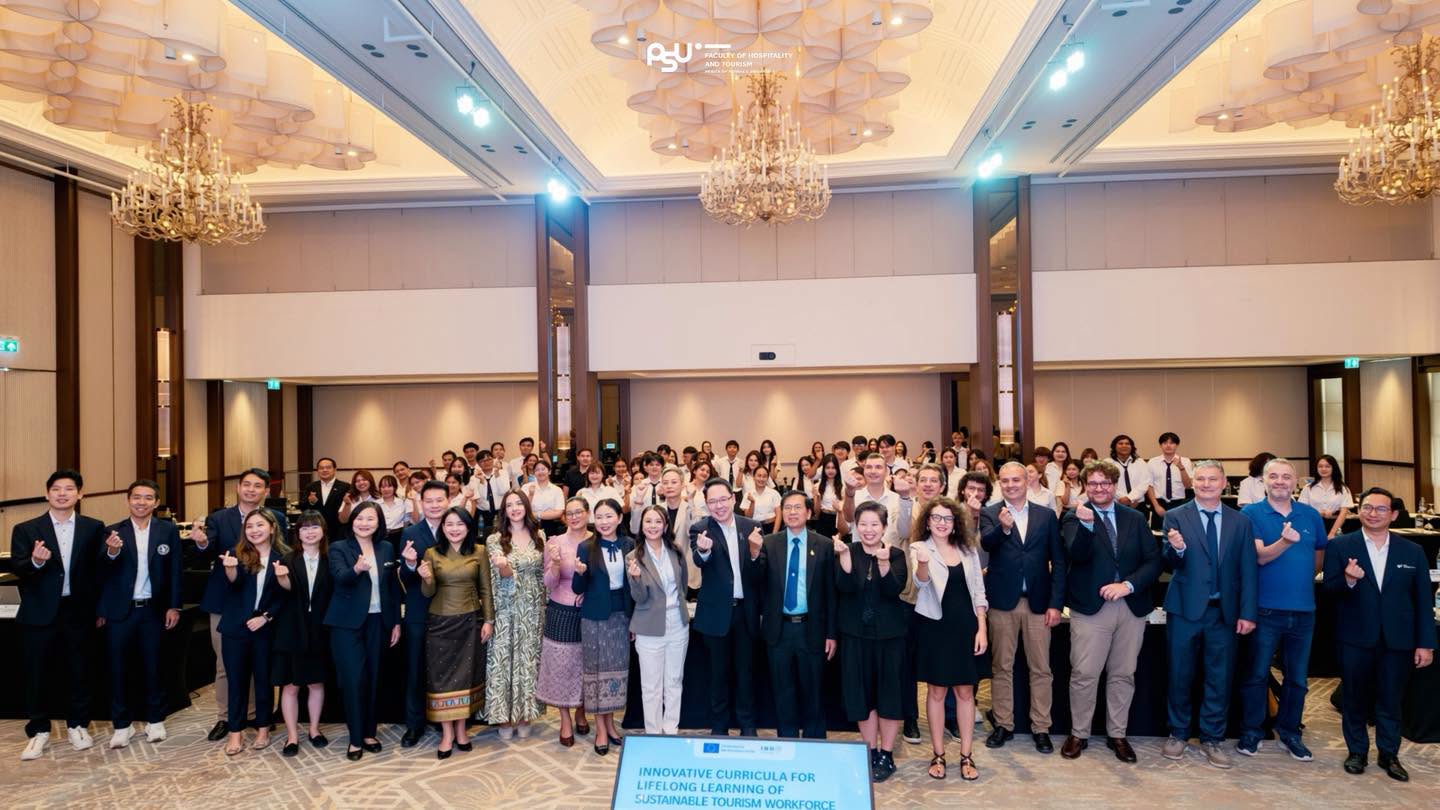
PHUKET, Thailand – 8–9 October 2026 – Chiang Mai University (CMU), through the College of Arts, Media and Technology (CAMT) and its interdisciplinary project team, participated in the Final Conference and Final Project Meeting of the INNO4Tourism – Innovative Curricula for Lifelong Learning of Sustainable Tourism Workforce project, held in Phuket, Thailand. The event was hosted by Prince of Songkla University (PSU), Faculty of Hospitality and Tourism, Phuket Campus, bringing together international partners from Thailand, Lao PDR, Italy, and Greece to present project achievements, exchange experiences, and discuss strategies for sustaining project outcomes beyond the funding period.
The INNO4Tourism project, funded by the European Union under the Erasmus+ Capacity Building in Higher Education (CBHE) programme, aims to strengthen sustainable tourism education, develop innovative lifelong learning curricula, enhance workforce competencies, and establish effective university–business cooperation mechanisms. Implemented from December 2023 to November 2026, the project involves nine partner institutions and organizations across Europe and Southeast Asia.
CMU Highlights Key Achievements and Project Outputs
As an active partner in the INNO4Tourism consortium, Chiang Mai University has contributed to the development and implementation of innovative educational approaches that address the evolving needs of the tourism and hospitality sectors.
Led by the CMU project team, including Assistant Professor Dr. Orawit Thinnukool, Assistant Professor Dr. Yuthasak Chatkaewnapanon, and Assistant Professor Dr. Pattaraporn Khuwuthyakorn, the initiative brings together expertise from the College of Arts, Media and Technology, the Department of Tourism at the Faculty of Humanities, the Faculty of Education, and the CMU School of Lifelong Education.
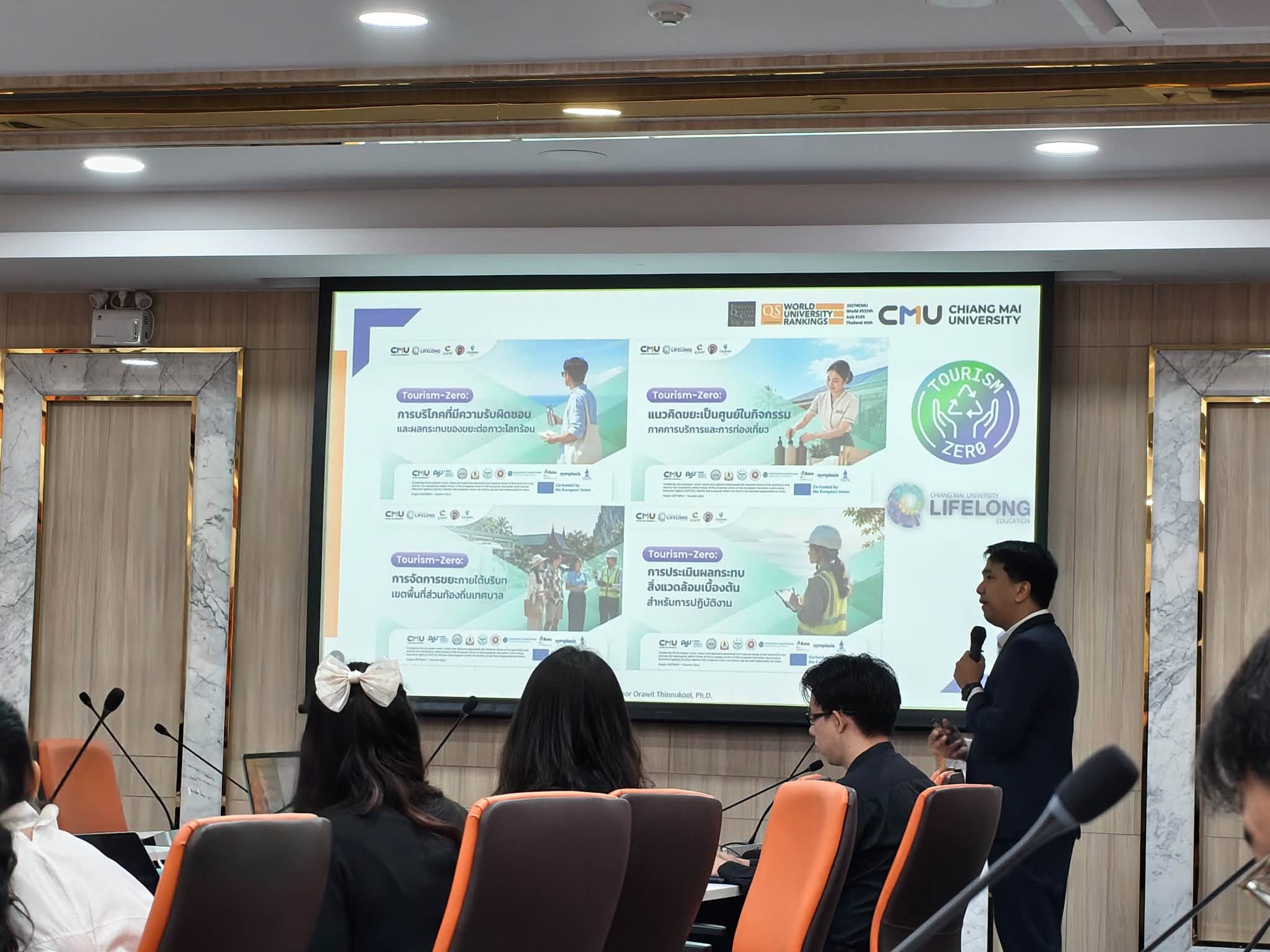
A major achievement has been CMU's contribution to the collaborative development and introduction of eight sustainable tourism courses comprising 16 learning modules, created through cooperation among universities in Thailand, Lao PDR, and Europe. These courses integrate sustainable tourism management, innovation, digital competencies, entrepreneurship, and modern hospitality practices. The learning materials have been introduced through the CMU Lifelong Education Platform, expanding access to professional development opportunities for students, graduates, entrepreneurs, and tourism industry personnel.
Another significant institutional output is the establishment of the Work-Integrated Learning and Career Services Center at Chiang Mai University. This center strengthens university–business cooperation by connecting academic learning with practical industry experience, career development, and workforce requirements. It provides an institutional mechanism for expanding collaboration among students, graduates, academic staff, tourism enterprises, and industry stakeholders.

CMU has also undertaken capacity-building and knowledge-transfer activities to demonstrate how the developed curricula can support practical workforce development. In September 2025, the university organized training on resource management and carbon footprint reduction in hotels, attracting more than 40 participants, including tourism entrepreneurs, business owners, and employees. The activity illustrated how INNO4Tourism learning resources could be applied to real-world environmental challenges facing the hospitality industry.
From Project Outputs to Sustainable Outcomes
Beyond the development of educational resources and institutional mechanisms, Chiang Mai University's participation has generated important foundations for longer-term institutional and societal impact.
The project's achievements contribute to strengthening the capacity of academic personnel to design industry-relevant learning programmes, expanding lifelong learning opportunities, and promoting the adoption of sustainable business practices among tourism professionals.
The establishment of the Work-Integrated Learning and Career Services Center provides a mechanism for maintaining university–industry collaboration and connecting learners with practical workplace opportunities. Meanwhile, the integration of INNO4Tourism curricula into CMU's lifelong learning ecosystem creates opportunities to continue delivering professional development activities beyond the formal project period.
These outputs are expected to contribute to improving workforce readiness, supporting the transition towards environmentally responsible tourism, and strengthening the competitiveness and resilience of the tourism and hospitality sector.
CMU Participates in International Exchange and Final Project Evaluation
During the Final Conference on 8 October 2026 at Courtyard by Marriott Phuket Town, representatives from Chiang Mai University joined international project partners in sharing implementation experiences, achievements, and lessons learned.
The conference featured discussions on sustainable tourism development, climate resilience, tourism workforce expectations, social sustainability, and emerging industry skills. The exchanges reinforced the importance of connecting innovative higher education curricula with the practical needs of tourism businesses and communities.
On 9 October 2026, CMU participated in the Final Project Meeting at the Faculty of Hospitality and Tourism, Prince of Songkla University, Phuket Campus. The meeting provided an opportunity for partners to review project implementation, evaluate achievements, discuss challenges, and explore strategies for the continued utilization of project outputs.
Strengthening Sustainability through ASTRA HUP and International Collaboration
The achievements of INNO4Tourism also complement Chiang Mai University's broader commitment to sustainable innovation and the ongoing development of the ASTRA HUP (Hub for University–Business Cooperation).

By building upon institutional cooperation mechanisms, international partnerships, curriculum innovation, and workforce development activities, the experience gained through INNO4Tourism offers opportunities to support the long-term sustainability of university–business collaboration and related initiatives at CMU.
The project's outputs, particularly the lifelong learning curricula and Work-Integrated Learning and Career Services Center, provide valuable resources and institutional mechanisms that can contribute to future training programmes, collaborative initiatives, and international project development.
Chiang Mai University's participation in the final conference therefore represents not only the presentation of achievements under the Erasmus+ CBHE programme but also a continued commitment to transforming international project outputs into sustainable educational practices and meaningful benefits for society.
Through INNO4Tourism, Chiang Mai University continues to advance its role in sustainable tourism education, lifelong learning, and university–industry collaboration, creating a foundation for future international partnerships and long-term institutional development.
More Information https://inno4tourism.eu/